
Tokyo in Autumn Foliage Season: How Little Prep Can You Get Away With? What to Decide Before Driving a Street Kart Down Fall's Tree-Lined Avenues
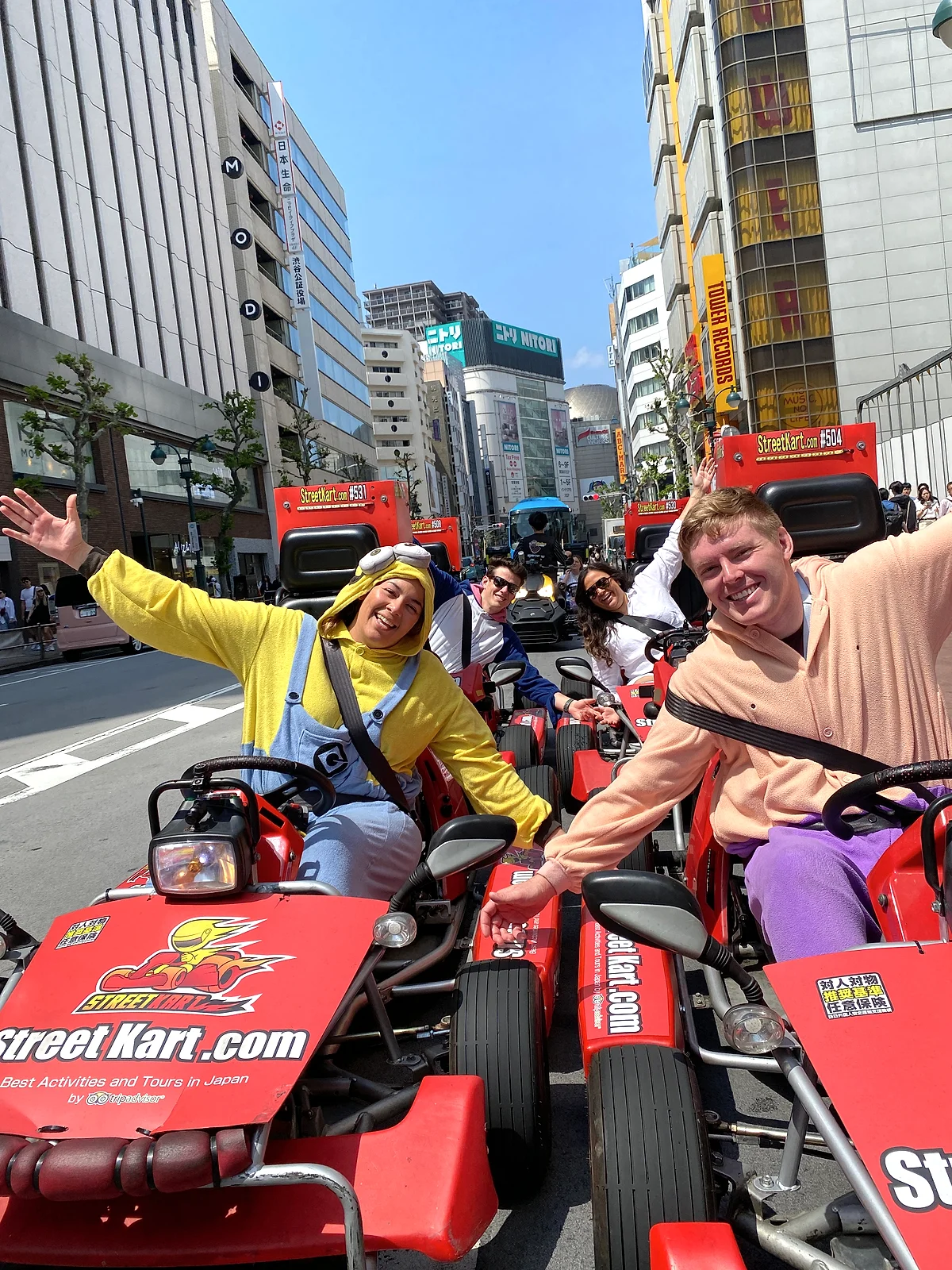
Tokyo in Autumn Foliage Season: How Little Prep Can You Get Away With? What to Decide Before Driving a Street Kart Down Fall's Tree-Lined Avenues
Once the zelkova leaves start turning from yellow to brown, the sky over Omotesando opens up a little.
If this is your second or third trip to Tokyo, the famous foliage spots are probably already on your map. So this time, why not try a different approach? Enjoy autumn in Tokyo with as little preparation as possible. The less time you spend researching and the less you carry, the more room you have to take in the colors of the season.
Before Cutting Back, Take Care of the Prep You Can't Skip
Honestly, what eats up the most time when planning a trip is the "just in case" research.
How far along are the colors in each park right now? What should you wear? Where will you take a break? The more times you've been to Tokyo, the longer your list tends to get, thanks to lessons from last time. But Tokyo's autumn foliage progresses differently every year. Even if you try to predict it perfectly weeks in advance, you rarely get it right.
So flip it around. Get the essential prep out of the way first, and leave the rest to whatever you find when you get there. With Street Kart, there are only three things you can't skip.
First, check your driver's license. Which licenses let you drive, whether you need an International Driving Permit, what to bring on the day: the answers depend on what type of license you have. Check your own situation on the official driver's license page. Skip this step, and you might not be able to get behind the wheel on the day. Even on a light-travel trip, this is the one thing you can't cut.
One important point: only the original physical license is valid. Digital licenses are not accepted. "It's on my phone, so I'm fine" won't work. If you don't have the required documents on the day, you can't participate, and there are no refunds. Before you head out, take one look to make sure the original is in your wallet or passport case. Even on a minimal-prep trip, this is the one thing to double-check.
Second, make a reservation. Bookings are accepted through Facebook, LINE, and email. Contact details are on the Street Kart official website. Weekends tend to fill up quickly, not just during the autumn travel season, so booking early gives you peace of mind.
Third, know what language the tour is in. Guidance on the day of the tour is basically in English. Japanese and other languages depend on the staff working that day and aren't guaranteed. If that matters to you, plan accordingly.
Once those three are done, you can travel light. By the way, the shops don't have parking, so use trains or other public transportation to get there and back.
Speaking of traveling light, you can cut down on luggage too. The kart only has room for a small bag or so. The shops have lockers for small items, but they aren't suitable for large luggage like suitcases. If you're driving on your checkout day, it's best to leave your big bags at your hotel or the station before you come. All you need to bring is your original license, your passport, and your booking confirmation email or reservation number. Add a smartphone and you're set.
Your usual autumn layers work fine for clothing. Comfortable clothes you can move in and closed-toe shoes (sneakers recommended) are advised. Avoid open-toe shoes, heels, skirts, dresses, and expensive clothing. A jacket suited to the season is also recommended. In autumn, even when the midday sun feels pleasant, the wind can suddenly turn cold in the evening. One light jacket should be just about right. Helmets and goggles are provided free of charge, so you don't need to bring your own.
Which Shop Has the Route That Shines in Foliage Season?
There are seven shops in Tokyo. However, Akihabara Shop 1 and Shop 2 are in nearly the same spot, as are the Shibuya Shop and Shibuya Annex. So it's not "seven separate areas."
If you're choosing based on autumn scenery, the highlights differ clearly from shop to shop.
Shibuya Shop & Shibuya Annex: The Zelkova Trees of Omotesando
I think the Shibuya Shop and Shibuya Annex routes give you the most obvious taste of autumn. That's because the highlights include the zelkova-lined avenue of Omotesando. Zelkovas change color in the fall, and both sides of the street gradually shift toward yellow and reddish-brown.
Plenty of people have walked down Omotesando. But to me, the trees you look up at from the sidewalk and the trees you see from the road feel like completely different things. The branches from both sides meet overhead and stretch into the distance like a tunnel. I never noticed that view when I was walking.
Omotesando is sometimes called "the Champs-Élysées of Tokyo," and beyond the trees you'll see Omotesando Hills and distinctive buildings designed by famous architects. The way the colors of the leaves overlap with the glass and stone of the buildings is something only autumn gives you. As the season heads into winter, this zelkova avenue is also known as a photo spot for Christmas illuminations. If you're driving toward the end of foliage season, take a good look at the thinning branches too. You'll catch a small hint of the season to come.
The route's highlights also include Takeshita Street in Harajuku, the area around Meiji Jingu, and the area around Yoyogi Park. Since you pass through some of the greenest parts of central Tokyo, you'll notice the change of seasons.
It's not just the trees. Shibuya Scramble Crossing is also one of the highlights, the famous intersection said to be crossed by 3,000 people at once. Autumn-colored trees and waves of people meeting in the heart of Shibuya. To me, what makes this area fun is how stillness and motion are connected along a single road.
Of course, how far the colors have progressed depends on the day you drive. Go in the spirit of seeing that year's Tokyo autumn, whatever it looks like.
Shinagawa, Akihabara, and Tokyo Bay: In Autumn, Choose by "Atmosphere" Rather Than "Color"
The Shinagawa Shop route features Rainbow Bridge, Tokyo Tower in the distance, and the Takanawa and Shibaura areas. The Akihabara Shop 1 and Shop 2 routes feature the red-brick Marunouchi building of Tokyo Station, Chuo-dori in Ginza, and the areas around Kanda Myojin and Ochanomizu. The Tokyo Bay Shop (Shin-Kiba) route's highlights are Rainbow Bridge, Odaiba, and Tokyo Tower.
To be honest, these three aren't "drive down a foliage-lined avenue" routes. They offer a slightly different way to enjoy autumn.
What I love is the combination of the bayfront and the red-and-white Tokyo Tower once the season has moved on and the air has turned crisp and clear. The red-brick Tokyo Station, too, looks much deeper in color when the low autumn sun hits it.
Autumn is also when the days get shorter. The 798-meter Rainbow Bridge lights up in seven colors at night. The Tokyo Bay Shop has an evening time slot, when you can enjoy the night view. The Shinagawa Shop also offers an evening option with less traffic. Autumn colors are a daytime pleasure, while the lights of the bay are a pleasure after sunset. Autumn evenings sit right on the border between the two.
The routes from Akihabara let you enjoy layers of history. Tokyo Station's Marunouchi building is a red-brick structure that opened in 1914, with restoration work completed in 2012. At the Ginza 4-chome intersection stands the Wako clock tower. The Tokyo of the Meiji and Taisho eras comes into sharp focus in the clear autumn air.
To sum up:
- Want to see the foliage itself while you drive Shibuya Shop / Shibuya Annex
- Happy to catch the foliage on a walk before or after, and drive through classic Tokyo cityscapes Shinagawa or Akihabara
- Want to see the bayfront scenery Tokyo Bay
Sort it out like this, and you'll spend less time agonizing over which shop to pick. Check the route details on the official website before you decide.
Why Street Kart Suits People Who Want to Prep Less
Seen from a "less prep" perspective, Street Kart has a few things going for it.
First, you don't have to research directions. Tours are led by trained guides, and each shop runs set courses. No need to set up a GPS, and no excuses for getting lost. Leave the road to the guide and just enjoy the view.
That said, what you leave to the guide is only the route. You're driving on Japanese public roads, so following Japanese traffic rules and the guide's instructions is your responsibility. Obey traffic lights and signs, keep a safe following distance, and drive at a safe speed. I understand the temptation to gaze at the trees, but save the long looks for when you stop to take photos.
Second, the kart itself is a vehicle that lets you feel the season. This is just my own impression, but the overlapping branches of the trees and the cold wind slipping between buildings seem to reach you directly. It's like taking in Tokyo's autumn, air and all.
Third, language. The website is available in 22 languages. Guidance on the day is basically in English. Knowing that ahead of time means you won't be caught off guard.
Fourth, rain. In light to moderate rain, tours go ahead as scheduled, and raincoats are provided free of charge. Tours are canceled in heavy rain or typhoons. During the autumn rainy spells, checking the weather forecast was all I needed.
The options if a tour is canceled are also set: switch to a shortened tour and get the difference refunded, change to another day, or cancel for a full refund. Longer courses may also be shortened depending on the weather. Plus, cancellation is free up to 7 days in advance. If your itinerary isn't fully settled yet, this is worth keeping in mind.
Fifth, the track record. As of November 2023, across all shops combined, there had been more than 150,000 tours, more than 1.34 million customers, and more than 20,000 reviews, with an average rating of 4.9 out of 5. Just for reference.
Sixth, the shops are within walking distance of stations. The Shibuya Shop and Shibuya Annex are a 5-minute walk from Shinsen Station and a 10-minute walk from Shibuya Station. The Shinagawa Shop is a 3-minute walk from Kita-Shinagawa Station.
Pick Up Autumn on Foot Before and After You Drive
The tour is all about driving. If you want to take your time with the foliage, set aside that time before or after the tour.
There's a trick to cutting prep here too: decide on just one place within walking distance of the shop. Try to visit several, and you're back to more research.
From the Shibuya Shop or Shibuya Annex, both Meiji Jingu and Yoyogi Park are a 20-minute walk. The sacred forest of Meiji Jingu covers about 700,000 square meters. It's so quiet you'd never guess it's right next to Shibuya. If you step into the forest after your drive, while the sound of the engine is still in your ears, the noise suddenly fades, leaving only the crunch of fallen leaves underfoot.
Switching up the order is fun too. Walk Omotesando before the tour, then see the same trees again while driving. With the walking view and the road view, you get autumn twice.
If you get a little hungry, grab a crepe on Takeshita Street, a 15-minute walk away. It's the complete opposite of Meiji Jingu's calm, but on an autumn afternoon, that contrast is part of the fun.
From the Shinagawa Shop, Shinagawa Shrine, a 5-minute walk away, is just the right distance. At the top of its stone steps, there's even a Fujizuka (a miniature Mount Fuji). Even a short stop before the tour puts you in an autumn mood. If you have time, the Takanawa Prince Hotel, a 15-minute walk away, has a Japanese garden.
If you can walk a bit farther, I also recommend Honsenji Temple, a 10-minute walk away. It's one of the Edo Roku Jizo (Six Jizo of Edo), a temple with over 1,200 years of history, and it has a large temple bell designated as a Tangible Cultural Property of Tokyo. Sengakuji Temple, a 20-minute walk away, is known for the graves of the 47 Ronin of Ako. Visiting it means retracing on foot the Takanawa area you passed through on the route.
Around Akihabara Shop 1 and Shop 2, there's Kanda Myojin, a 10-minute walk away, and Ueno Park, 5 minutes by train. Ueno Park also has a cluster of art galleries and museums, so you won't be left with time to kill even if the foliage isn't great that day. The Kokyo Gaien National Garden and the East Gardens of the Imperial Palace, a 25-minute walk away, are also good options for a stroll.
Kanda Myojin is a shrine with 1,300 years of history, known as the "guardian shrine of all Edo." The atmosphere shifts after just a short walk from the bustle of the Electric Town, making it a perfect place to reset before your tour. If you want to take a slower second look at Tokyo Station or Ginza after driving past them, Tokyo Station is 5 minutes by train from Akihabara.
For the Tokyo Bay Shop, I recommend skipping side trips and simply enjoying the tour itself. Highlights like Rainbow Bridge, Odaiba, and Tokyo Tower are all on the course.
There's one thing I always tell my friends from overseas: "One plan before or after is enough." Rather than hopping from one famous spot to the next, relaxing in a single place lets the colors of the day really stay with you, in your photos and in your memories.
Prep You Can Skip, and Prep You Shouldn't
Finally, let's sum it all up.
Three things you shouldn't skip: checking your driver's license, making a reservation, and knowing that guidance on the day is basically in English.
Things you can boldly skip: tracking peak foliage weeks in advance, researching directions, and planning detailed multi-stop itineraries. The colors vary from year to year, and the guide leads the way on the road. For side trips, picking one place within walking distance of the shop is enough. And at the Tokyo Bay Shop, you can skip side trips and just enjoy the tour.
While I'm at it, you don't need to research "where to take a break" that much either. Every shop has restrooms, and there's a convenience store within a 5-minute walk of each one. As for rain gear, raincoats are provided free in light to moderate rain. Helmets and goggles are free too. You can cross more off your packing list than you might think.
I've been in Japan for five years, and what still surprises me is how Tokyo's autumn shows a different face on every street. If you toured the guidebook foliage spots last time, I especially hope you'll prep less this time and watch the season from the middle of the city. You'll probably think, "It's the same Tokyo, but it looks like this?"
First, check your license on the driver's license page. Next, decide which shop and which day you want. That's it. Weekends fill up fast, so if you're aiming for an autumn weekend, check how to book on the Street Kart official website early.
As for how far the zelkova leaves have turned, that's something to look forward to on the day.
This article was originally written in Japanese and translated using AI. Some expressions may read unnaturally, and we appreciate your understanding. For the most accurate and up-to-date information, please refer to the official site at kart.st.
Street Kart is not affiliated with Nintendo or the Mario Kart series in any way. We do not provide costumes of Nintendo characters, and such costumes may not be worn during tours even if brought by participants.