
Driving the Same Tokyo Roads Again in a Different Season: How Your Companions' Reactions Show You New Ways to Enjoy a Street Kart Tour
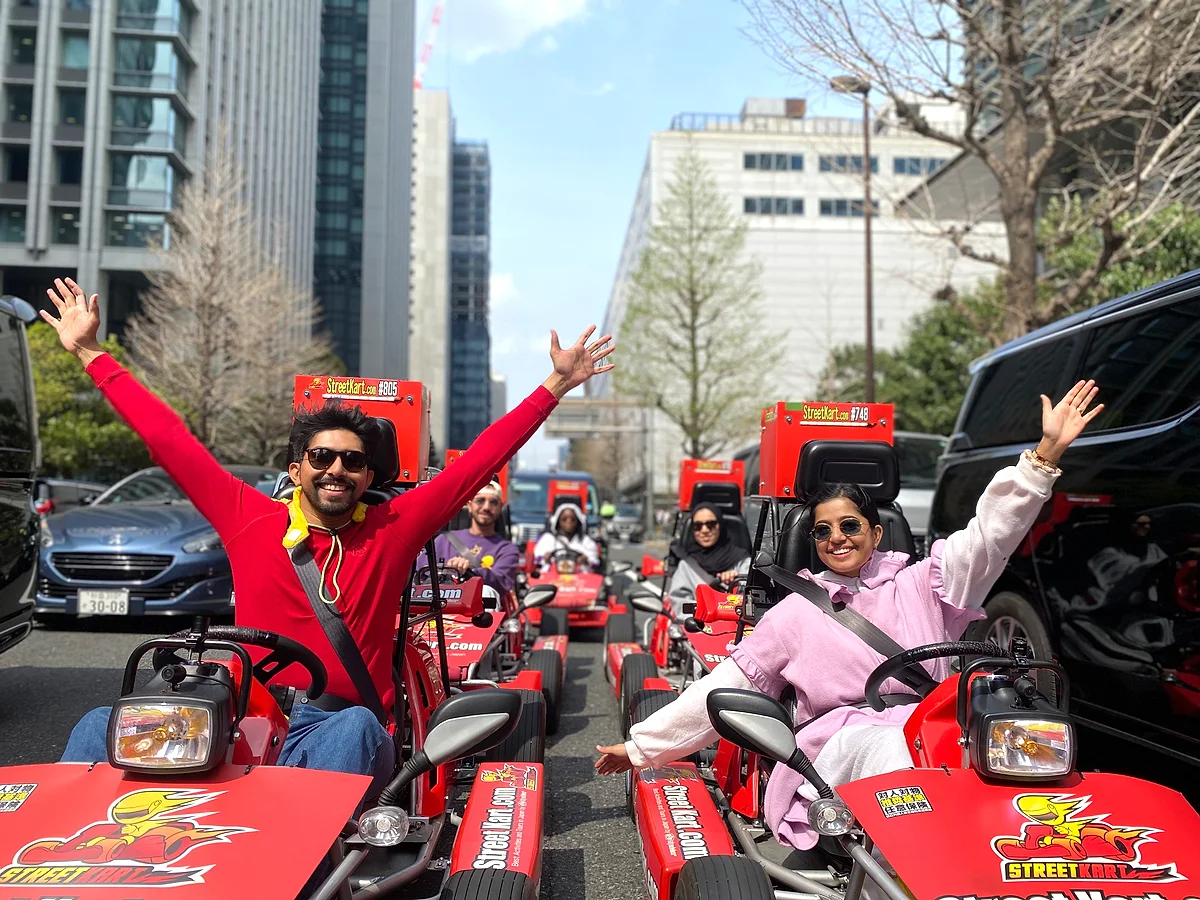
Driving the Same Tokyo Roads Again in a Different Season: How Your Companions' Reactions Show You New Ways to Enjoy a Street Kart Tour
You're booking the same route you've already driven.
It can feel like a bit of a waste. I get it.
But when the season changes, even the same intersection feels different. The wind has a different chill. The light comes in at a different angle, and the trees along the avenue are a different color. Most of all, the people driving beside you react differently.
This article is for people coming back to Tokyo. Suppose you return to the route from your last tour in a different season. Where will your companions turn to look, and what will they say? I'll use their reactions as a guide to show how you can enjoy a second street kart tour.
Why Choose "the Same Road as Before" Again?
Experienced travelers tend to look for new places on a second trip to Tokyo: areas they haven't been to, sights they haven't seen yet. That makes sense.
But there's one pleasure that's easy to miss.
It's seeing the same place again with only the conditions changed.
If you like photography, you'll know what I mean. The same subject makes a completely different picture in another season or another kind of weather. Tokyo's roads work the same way. The waterfront road where you were wiping sweat off your face last time becomes, in winter, a channel for wind that stings your cheeks. The tree-lined avenue that was a green tunnel suddenly opens up to a wide sky once the leaves fall.
This is where your companions come in.
If they came with you last time, they'll start comparing on their own: "It wasn't this cold here last time, was it?" If they're new, they'll casually point out things you missed on your first trip. Either way, you notice things your own memory couldn't have shown you.
Honestly, I think about half the fun of a second tour comes from watching the faces of the people next to you. That's my personal take, anyway.
Why Do Your Companions React Differently When the Season Changes?
Street karts don't have roofs, and you sit low to the ground.
So the wind, the heat rising off the pavement, and the sounds of the city reach your body almost directly. It's less like looking at Tokyo and more like soaking it in.
That's why the difference between seasons feels so much bigger. A few degrees of temperature changes how your hands feel on the steering wheel. When the sun gets stronger, you squint more often.
And people usually react with their bodies first.
"It's cold." "It's so bright." "Something smells good."
Comments about the scenery come after that. When you drive the same road in a different season, the first words out of your companions' mouths change. If you pay attention to those differences, you'll see that the same route really does become a different experience.
By the way, each kart seats one person. Your companions drive their own karts, following a guide in a line. You can't chat the whole time you're driving, so the conversations at red lights and after the tour matter a lot. More on that in a later section.
How the Same Roads Change with the Seasons, Store by Store
In this section I'll use landmarks you can see on routes from the Tokyo stores as examples. I'll describe how each one looks in different seasons and where your companions are likely to react. Which landmarks you pass depends on the store and the tour, so check the official website before booking.
There are seven stores in Tokyo. Akihabara Store 1 and Store 2 are in almost the same place, and so are the Shibuya store and Shibuya Annex. If you want to drive the same road as last time, check the current courses on the official website (kart.st) before you book. If you choose a different store, you'll have more to compare. Either way works.
Shibuya and Omotesando: Under the Zelkova Trees, Do Your Companions Look Up or Straight Ahead?
One landmark you can see on routes from the Shibuya store and Shibuya Annex is the row of zelkova trees along Omotesando. The avenue is lined with luxury brand shops and distinctive buildings designed by architects.
When the leaves are thick and green, the trees form a roof over your head. Light filters through the leaves and makes a dappled pattern on the road. At this time of year, your companions will probably be looking straight ahead, because their eyes go to the shop windows and to the clothes of people walking along the sidewalk.
Once the leaves fall, everything changes. The sky opens up beyond the branches, and the outlines of the buildings stand out sharply. Travel guides also list the avenue's Christmas illuminations as a photo spot. If you drive this road in winter, your companions will probably look up. When you stop at a light, someone who stayed quiet last time might say, "Were the buildings here always this interesting?"
The illumination period may vary from year to year. If you're going in winter, check the latest local information before you finalize your plans.
On the same route you can also see the area around Takeshita Street in Harajuku, the Shibuya Scramble Crossing, and the forest around Meiji Jingu Shrine. At the Scramble Crossing, the weather changes the scene more than the season does. On clear days you can clearly see the flow of people. On rainy days, colorful umbrellas fill the crossing. Whether a tour runs on a rainy day depends on the weather, though, so check the official website for this too.
Tokyo Bay: Rainbow Bridge and the Sea Breeze, and Which Comes First, "It's Cold" or "Wow"
On routes from the Tokyo Bay store (Shinkiba), you can see Rainbow Bridge, the Odaiba area, and Tokyo Tower in the distance. Rainbow Bridge is a 798-meter suspension bridge that is lit up in seven colors at night. Tokyo Tower is a red-and-white steel tower, 333 meters tall, completed in 1958.
I think the waterfront roads are where you feel the seasons most physically.
In the hot months, the glare off the pavement and the humidity cling to you. Even with a sea breeze, whether it feels cool depends on the day. Tokyo can get very hot from summer into early autumn, depending on the year. Don't assume it will be cool just because it's by the sea.
In the cold months, the wind is clearly cold. With nothing to block it, the sea breeze hits you head-on.
What's interesting is the order of your companions' words.
In the hot months, "Wow" tends to come out the moment the bridge appears. In the cold months, "It's cold" will probably come first, followed a moment later by "...but it's beautiful." If the air is clear, you might even be able to make out the outlines of distant buildings. If you're driving with the same person as last time, remember the difference in that order and bring it up afterward. It makes for a fun conversation.
Whether you'll see the bridge lit up at night depends on the time of your tour and on how long the days are that season. Sunset times shift a lot between seasons, so there's no guarantee that a certain time slot will give you a night view. If you want to see the bridge at night, check the tour time slots on the official website before choosing.
Akihabara: What Do Your Companions React To at Tokyo Station's Red Brick and on the Streets of Ginza?
On routes from Akihabara Store 1 and Store 2, you can see sights such as the Marunouchi building of Tokyo Station, Ginza, and Akihabara Electric Town. The Marunouchi Station Building of Tokyo Station is a red-brick station building that opened in 1914. It is an Important Cultural Property, and its restoration was completed in 2012.
The red brick changes color with the light. On sunny days it leans toward a bright orange. On cloudy days, or in the low winter light, it's a calm, deep red. If you bring photos from your last visit, it's fun to compare them with your companions.
In Ginza, you can see the Wako clock tower at the 4-chome intersection, Ginza Mitsukoshi, and Matsuya Ginza. On this street, your companions will probably react to the seasonal decorations. The shop windows change with the seasons, so even when you pass the same stores as last time, you'll see something different.
Chuo-dori in Akihabara Electric Town is overflowing with colorful signs and sounds. Here the season shows up less in the scenery and more in what people on the street are wearing. The overall palette of the street looks a little different in light-clothing season than in heavy-coat season.
Tips for Catching Your Companions' Comments
If you're driving the same road in a different season, you'll want to catch your companions' reactions. But while you're driving, focus on driving. Don't take notes or photos on your smartphone behind the wheel.
So when can you catch those comments? I recommend three moments.
The first is before the tour starts. Ask once: "What stuck with you most last time?" If they came with you before, that brings the memories back, and they'll start comparing naturally as they drive. If they're new, tell them about just one place you liked last time. If you tell them everything, you take away the fun of finding things for themselves.
The second is while you're waiting at red lights during the tour. The conversations here are short. You may only manage "It's cold" or "Look." But those short words are the most honest. Just remembering them is enough.
The third is after the tour, and this is the main event. With a warm drink if you're chilled, or a cold one if you're sweaty, go back through those short comments one by one. Start with "Where was it that you said you were cold?" and the conversation won't stop.
It's also interesting when your companions are different people from last time. Your friend last time reacted to Tokyo Tower, but your friend this time kept looking at the buildings in Odaiba. Once you realize that different people notice different things, the same route looks a little different again.
Preparing for the Season to Make Sure Your Companions Enjoy Themselves
If you want your companions to have a good time, preparing for the season is essential. The karts have no roof, so what you wear directly affects how comfortable you are.
In the hot months, the main thing is protection from the sun and the glare off the pavement. Plan when to drink water before and after the tour. If a companion isn't feeling well, don't push them.
In the cold months, a windproof jacket makes a big difference in how the cold feels. Hands and necks get cold especially easily, so if a companion tends to feel the cold, tell them ahead of time. You'll need to follow each store's guidelines on clothing and what you can bring. To avoid scrambling on the day, check the official website in advance.
For rain, the safest approach is to check ahead of time how tours are handled in bad weather. Especially if your companions are coming from far away, planning a backup day will give you some peace of mind.
What Makes Street Kart Appealing
Here's a look at what sets Street Kart itself apart.
First, it's a guided tour. A trained guide drives in front, and participants follow behind.
Next, language. Tour guidance on the day is basically in English. Guidance in Japanese or other languages depends on the staff that day and isn't guaranteed. If this matters to you, check the official website in advance.
The official website is available in 22 languages. If your companions like to read information in their native language, sending them the link in advance is a good idea.
There are nine stores nationwide: seven in Tokyo, one in Osaka, and one in Okinawa. This article is about Tokyo, but if your next trip takes you to Osaka or Okinawa, you'll also get to compare the experience with your memories of driving in Tokyo.
As for its track record, as of November 2023, across all stores, it had run over 150,000 tours and served over 1.34 million customers, with over 20,000 reviews and an average rating of 4.9/5.0. All of these figures are as of November 2023.
Another feature is that the landmarks you can see differ from store to store: the tree-lined avenue of Omotesando, the suspension bridge on the waterfront, the red-brick station building. With such a range of scenery, you can compare not only by changing the season but also by changing the store.
Finally, everyone drives their own kart. Your companions steer for themselves too. Each person feels the season with their own body. The post-tour conversation clicks because everyone was out in the same wind.
Things to Keep in Mind for Booking and Advance Checks
Bookings are accepted via Facebook, LINE, email (booking@streetkart.com), and other channels. Weekends tend to fill up, so book early once your dates are set. If you want to drive the same road again in a specific season, it's all the more important to act early.
Driver's license requirements vary by country and license type. You need your original license, and digital licenses are not accepted. Especially if your companions are coming from other countries, read the license information on the official website together in advance. If you don't have the required documents on the day, you won't be able to participate, and you won't get a refund. Please check the official website for full details on the requirements.
Tour length and departure times vary by store and plan. Prices vary by season and time of day, so please check the official website (kart.st) for the latest prices. Confirm these details before you add the tour to your itinerary.
Next Season, on the Same Road Once More
Choosing the same road as before doesn't mean you're not doing anything new.
Change the season. Change your companions. Or drive again with the same person. Any one of these will make the Tokyo you thought you knew look a little different.
On Omotesando, will your companions look up? On the waterfront, which will they say first: "It's cold" or "It's beautiful"? What will they say when they compare the color of the red brick with your photos from last time?
You won't know until you drive.
Once your next trip to Tokyo is set, pick just one photo from last time and show it to your companions.
Then book the same road in a different season.
This article was originally written in Japanese and translated using AI. Some expressions may read unnaturally, and we appreciate your understanding. For the most accurate and up-to-date information, please refer to the official site at kart.st.
Street Kart is not affiliated with Nintendo or the Mario Kart series in any way. We do not provide costumes of Nintendo characters, and such costumes may not be worn during tours even if brought by participants.